Put the phone down, run the timer, keep what the time earned
A session is the only thing Zenera really does. You decide how long, you put the phone down, and a session you see through to the end pays for every minute of it — double for your first hour each day. Nothing else in the app needs learning.
15–120
minutes in a session, decided before it starts. You cannot extend it partway through and you cannot shorten it without losing the lot.
2 Z
a minute for your first hour each day, one a minute for the two after it, and less again beyond that. Credited in one piece when the timer runs out rather than accruing as it goes.
None
of your app usage reaches us. Zenera never asks which apps you use; it only notices whether it is still open or your phone has locked.
The shape of it
One session, drawn end to end
Four stages and a single branch. Everything else in this page is detail hanging off this drawing, so it is worth two minutes before the words.
A session, step by step
Four steps, and then it gets out of the way
There is a timer, a balance and a list of places to spend it. The timer runs on your phone, which is why it keeps counting when our server cannot be reached.
Choose the length
Anywhere from fifteen minutes to two hours, set on the dial before you start.
There is nothing else to set up: no list of apps to pick and no permission to grant. The only thing a session asks of you is to leave the phone alone until it is over.
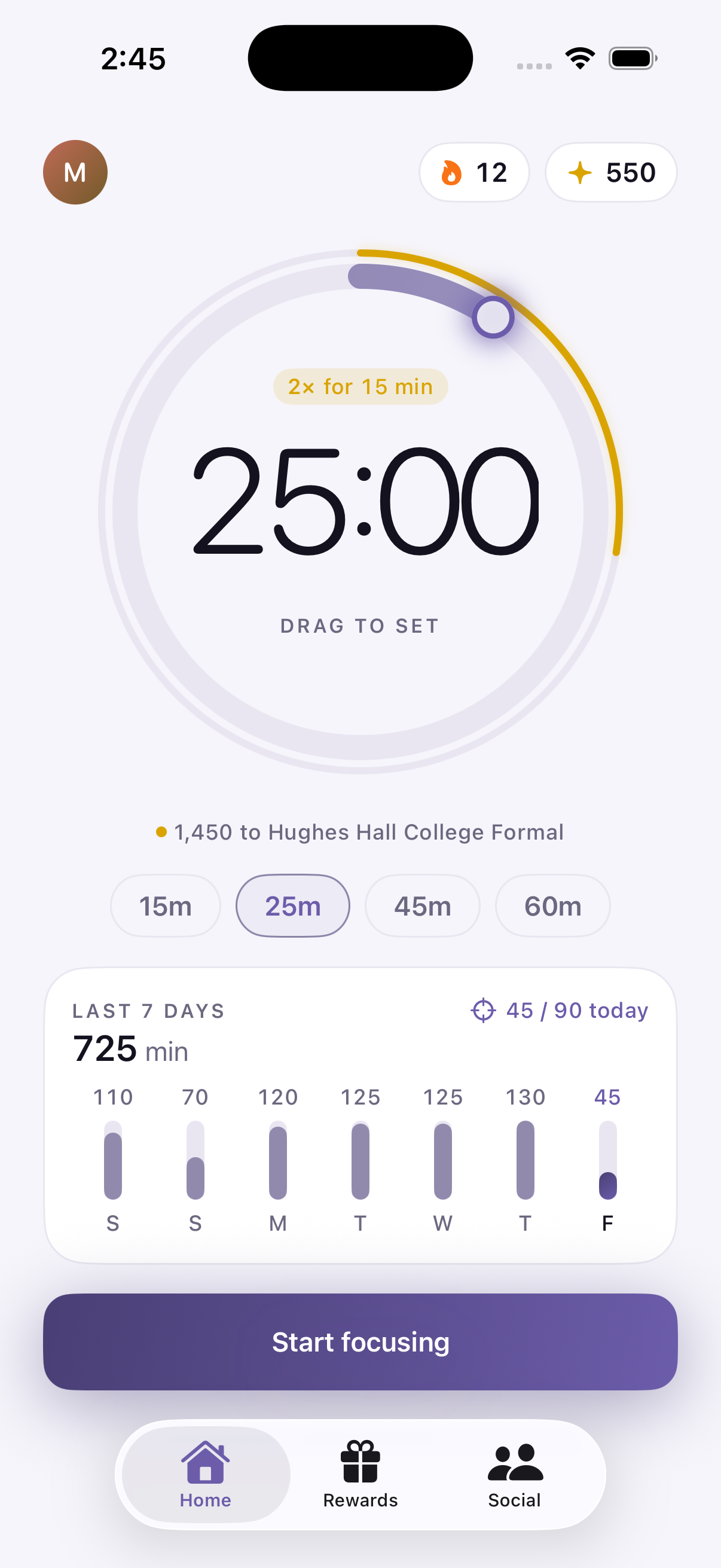
Start, and put the phone down
Lock your phone and the session carries on, with the time left on the Lock Screen. Leave Zenera open on the table and it counts just the same.
Open another app instead and the session ends. If you switched by mistake you have about twenty seconds to come back, and if you do not, a notification says what happened. Locking only counts on a phone with a passcode, because that is the only time iOS tells an app the screen has locked.
Still works with the phone locked
- The countdown, on the Lock Screen
- Notifications and music controls
- Your alarm
Finish it, or forfeit it
Reach the end of the timer and the session credits in a single entry. The first hour you focus each day pays two Z Tokens a minute, the two hours after it pay one, and it keeps falling from there without ever reaching nothing — so a first hour is a hundred and twenty tokens and a fourth is worth having but worth less.
End it early, or leave for another app, and you get your time back immediately, with nothing earned and nothing deducted. There is no partial credit, no penalty and no way to appeal it, and that plain rule is the whole mechanism. Sessions finished without a connection are kept on the device and sent the next time the app reaches the server, where time we could not see pass earns up to an hour a day.
What a session pays
- A twenty-five minute session, first of the day
- 50 Z
- An hour, first of the day
- 120 Z
- A second hour, the same day
- 60 Z
- Ended at twenty-four minutes of twenty-five
- 0 Z
Spend the tokens nearby
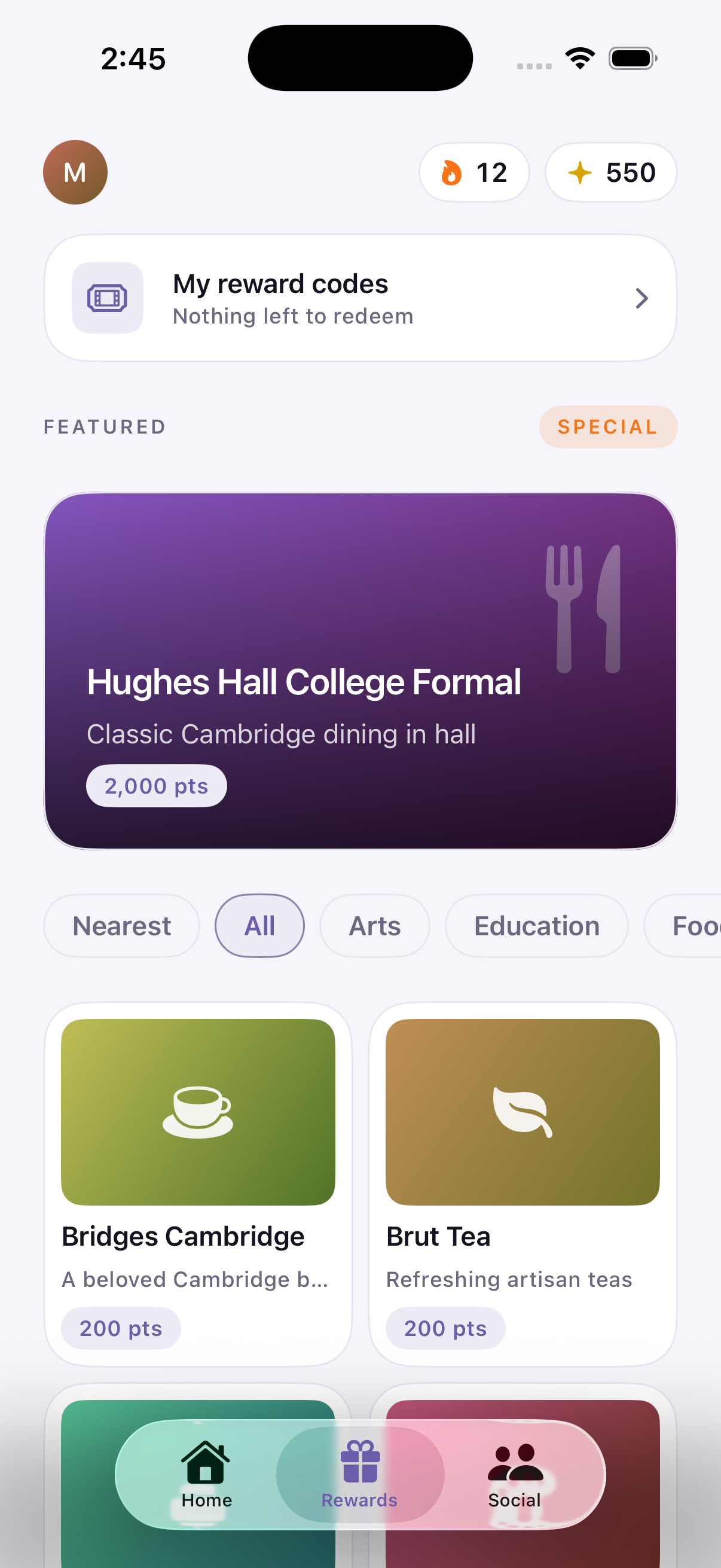
Claim a reward in the app and the tokens leave your balance there and then. You are shown a short code and a QR code to present at the counter.
Staff scan or type it, in the Zenera app or on a web page, and that is the transaction. No card, no account with the business, and nothing about you passed on to them.
What it adds up to
How long until a balance buys something
This is the rule run forward, not a projection. Every figure assumes the hour a day the app is actually asking for, which is the hour that pays double; longer days earn more, just less and less per hour. Nothing here is an average of other people.
| If you keep to | A week | A fortnight | A month |
|---|---|---|---|
| 25 minutes a day | 350 Z | 700 Z | 1,500 Z |
| 45 minutes a day | 630 Z | 1,260 Z | 2,700 Z |
| An hour a day | 840 Z | 1,680 Z | 3,600 Z |
Privacy
What you use your phone for stays on your phone
Zenera never asks which apps you have or use, and has no way to find out. The only thing it notices is whether it is still open or your phone has locked, and it notices that on the phone. What reaches us is the session, not how you spent the rest of your day.
Momentum
A streak you can see, and a table you can opt out of
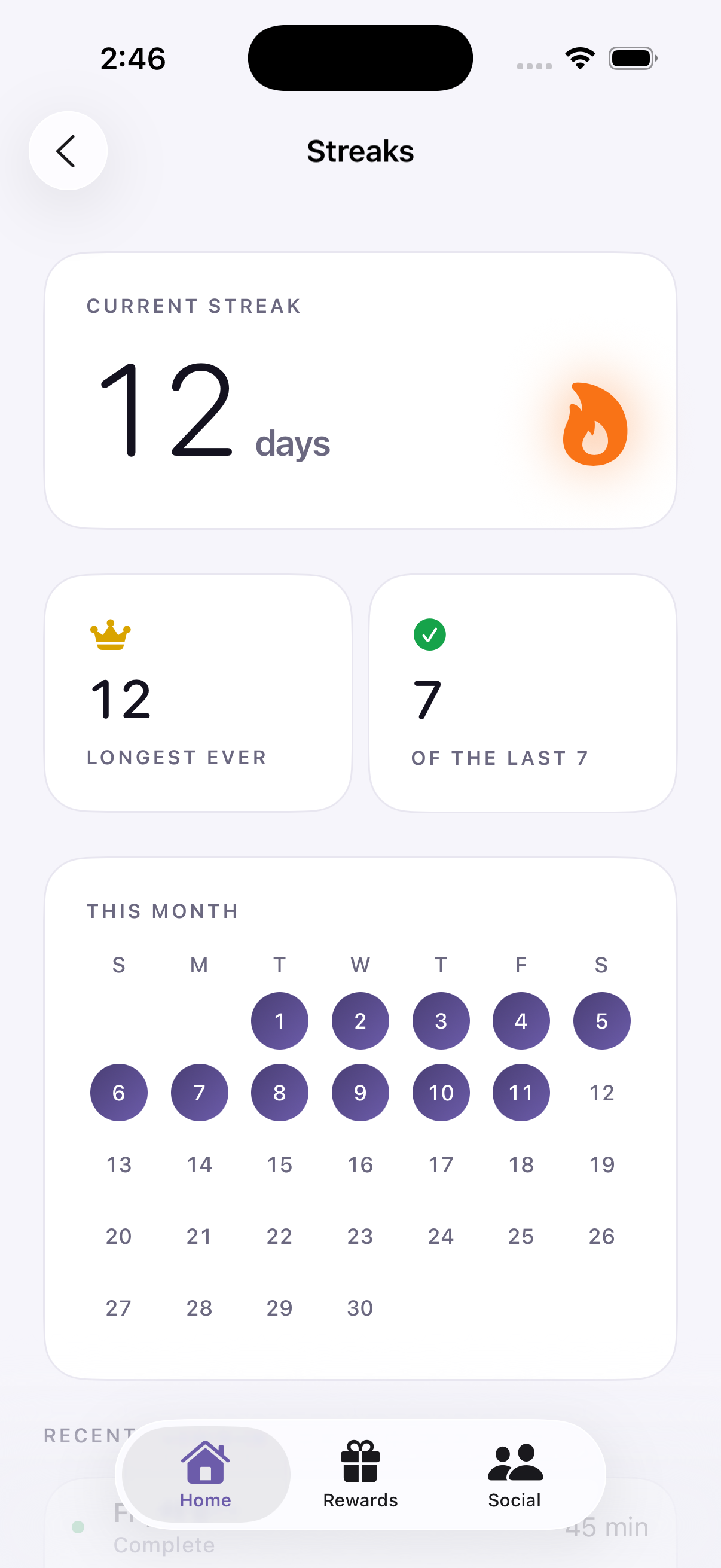
A streak counts the days you finished at least one session. Miss a day and it resets, which is a blunt instrument, and that is precisely why it works. There is no way to buy one back.
Streaks
7consecutive days
One completed session a day keeps it, of any length. The counter sits on the home screen where you cannot miss it, and it rolls over at midnight in your own time zone.
The leaderboard
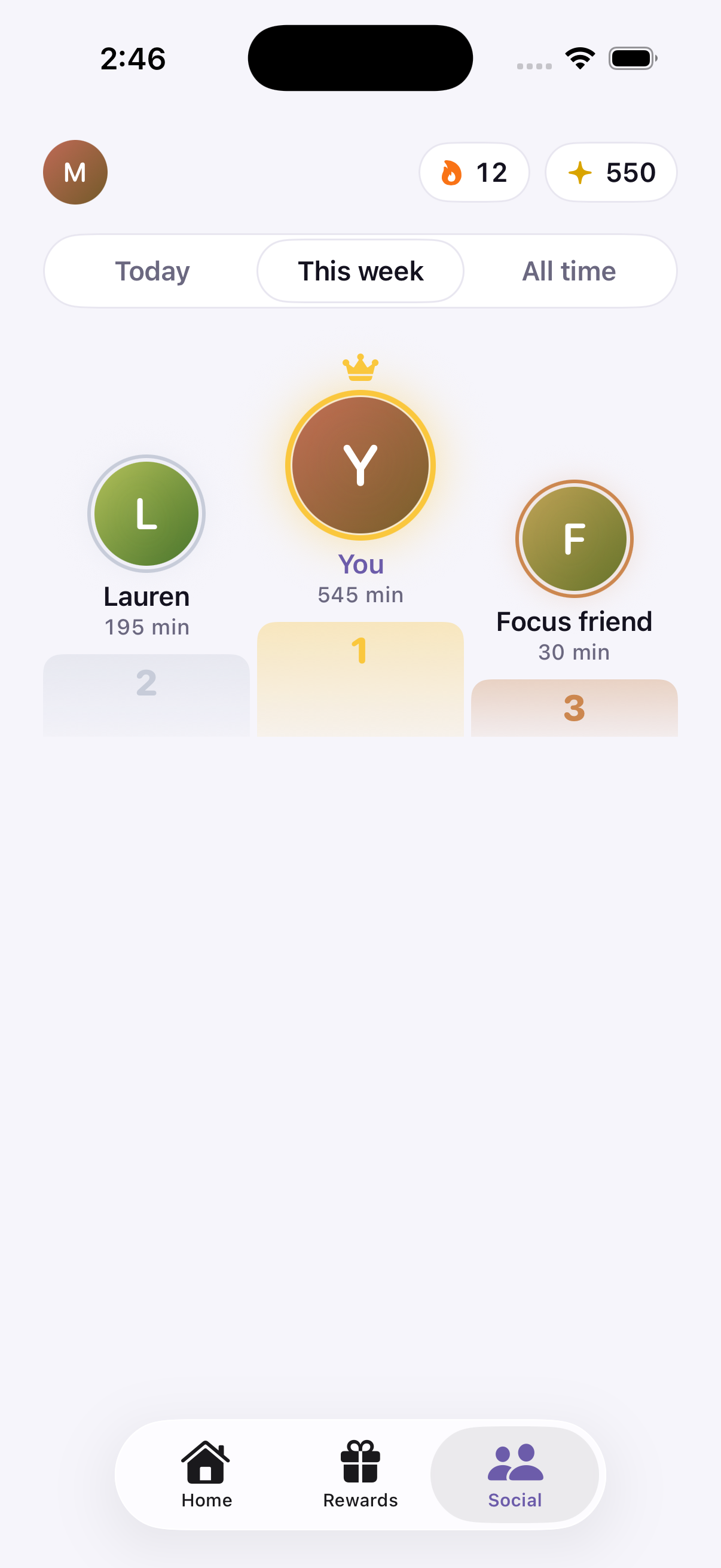
Focused minutes for today, this week and all time. It shows minutes rather than balances, and you can take yourself off it whenever you like from your profile: leaving costs you nothing and your tokens stay where they are.
Then see what the time is worth
Twenty-five minutes is enough to tell whether the mechanism suits you. The prices are set against the hours they take to earn, so it is worth knowing what a balance buys before you start building one.
The price list, the kinds of places that take part, and what happens at the counter.